AI that drafts, humans that decide
By The Askery Team
- ai
- form authoring
- schema
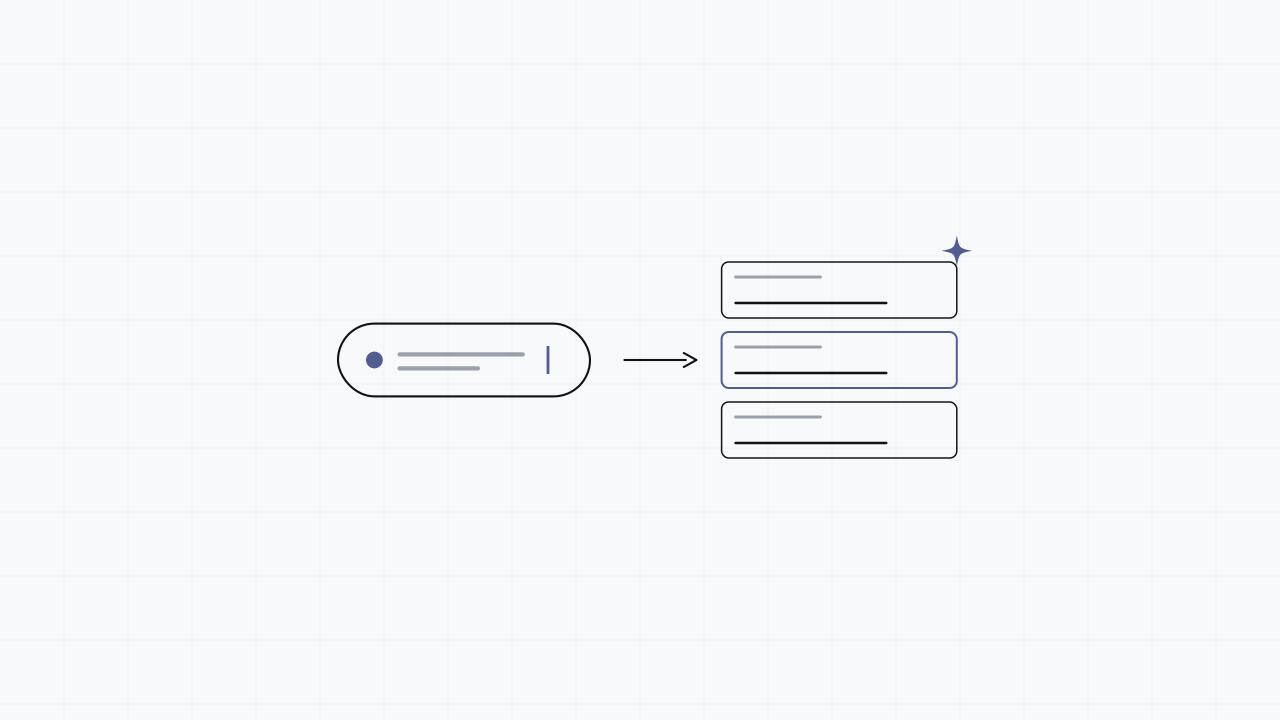
The promise and the trap of generated forms
Describe a form in a sentence and get a complete draft back in seconds. That is a genuine speedup - the blank-page problem is real, and the first version of any survey is mostly mechanical work the model is good at.
The trap is what the speedup costs you. If generation produces something the editor cannot fully open, tweak, and trust, you have not saved time; you have borrowed it against a debugging session later. A draft you cannot inspect is a liability with a fast first impression.
The useful question is not 'can AI write a form'. It clearly can. The question is whether what it writes is real, editable structure or a convincing mock that falls apart the moment you change it.
Constrained generation, not freeform text
The model does not emit prose that something else parses and hopes for the best. It emits structure that must conform to the same canonical schema the application validates and runs on. Generation is constrained by the schema, not merely guided by a prompt.
This matters because it removes an entire class of failure. There is no 'the AI produced something almost valid' state to recover from. Output either conforms to the schema or it is rejected before it ever reaches the editor - the same gate every human-built form passes through.
The practical effect: a generated form and a hand-built form are indistinguishable once created. Same structure, same validation, same export. The model is a faster way to reach the canonical representation, not a parallel path that produces a different kind of artifact.
Describe outcomes, not fields
The best prompts say what the form is for and who fills it in, then stop. 'Post-event feedback for attendees of a one-day conference, we care most about session quality and whether they would return.' Let the model choose field types, ordering, and scales; refine from there.
Listing exact fields turns the model into a slow form of typing. Describing the outcome lets it apply patterns - putting the recommendation question early, keeping scales consistent, not double-barrelling - that you would otherwise have to remember yourself. Our guide to building forms with AI goes deeper on prompt shape.
The human stays the decision-maker
Generation produces a draft; it does not produce a decision. Every generated form lands in the same editor as everything else, fully open, with no read-only AI region and no hidden state. Nothing is final because a model proposed it.
This is the line that keeps AI authoring trustworthy: the model is allowed to draft, never to decide. It accelerates the part that is mechanical and leaves the part that requires judgment - what to ask, what to cut, what bias a question might introduce - exactly where it belongs, with the person who owns the result.